
Building a new home invites an unusual luxury: you get to decide how the house will feel on a bitter January morning. The heating system in a new build is more than a mechanical choice, it is a long relationship with comfort, costs, and resilience. The right decision starts before framing begins and continues through commissioning and the first cold snap. After years of walking builders and homeowners through heating system installation, I have a simple guiding principle: design the building and the heating together, not in sequence. Everything flows from that.
Start with the building, not the boiler or heat pump
A tight, well insulated shell changes the rules. A high‑R envelope with careful air sealing can cut heat load by half or more compared to a code‑minimum build. That reduces equipment size, duct runs, and operating costs, and it improves comfort. I have seen 2,400‑square‑foot homes with peak design heat loads under 25,000 BTU/h in cold climates simply because the envelope was done right.
Spend attention on the following: continuous insulation at the exterior, high‑performance windows sized and oriented for solar control, airtightness targets verified with blower door testing, and mechanical ventilation with heat recovery. Once you have a realistic heat load from a Manual J or equivalent calculation, equipment selection becomes a rational exercise instead of guesswork.
The load calculation you can trust
Manual J is not a spreadsheet someone finds online, https://alexisbnym626.wpsuo.com/safety-tips-for-your-heating-unit-installation-day it is a method that demands inputs grounded in your actual house: wall assemblies by layer, window U‑factors and SHGCs, infiltration tied to target ACH50, and local design temperatures. When a contractor proposes equipment before performing a room‑by‑room load calculation, you are being sold habit rather than service.
Two numbers matter most: total design heat load and room‑by‑room loads. The first sets capacity for the central plant, the second governs distribution design. For an all‑electric home with a solid envelope, it is common to see 10 to 15 BTU/h per square foot in cold regions, and far less in temperate zones. That is nowhere near the 30 to 40 BTU/h per square foot rules of thumb some installers still use. Oversizing by even 30 percent can lead to short cycling, stratification, and noise. Undersizing, if modest and paired with a smart control strategy, can be acceptable because modern variable‑speed equipment modulates and can lean on backup heat during extreme weather.
Picking the right system type
There is no universal best system. The appropriate heating system installation for a new home depends on climate, fuel availability, budget, desired comfort profile, and architectural constraints. Here is how the major options stack up in practice.
Air‑source heat pumps
Variable‑speed cold‑climate air‑source heat pumps have changed the playbook. In many regions, they heat efficiently down to 5°F, sometimes lower, with seasonal COPs in the 2.0 to 3.0 range. Ducted systems with short, well‑sealed runs offer quiet, uniform heat and can share distribution with cooling. Ductless or ducted mini‑splits make sense for compact layouts or zoned designs.
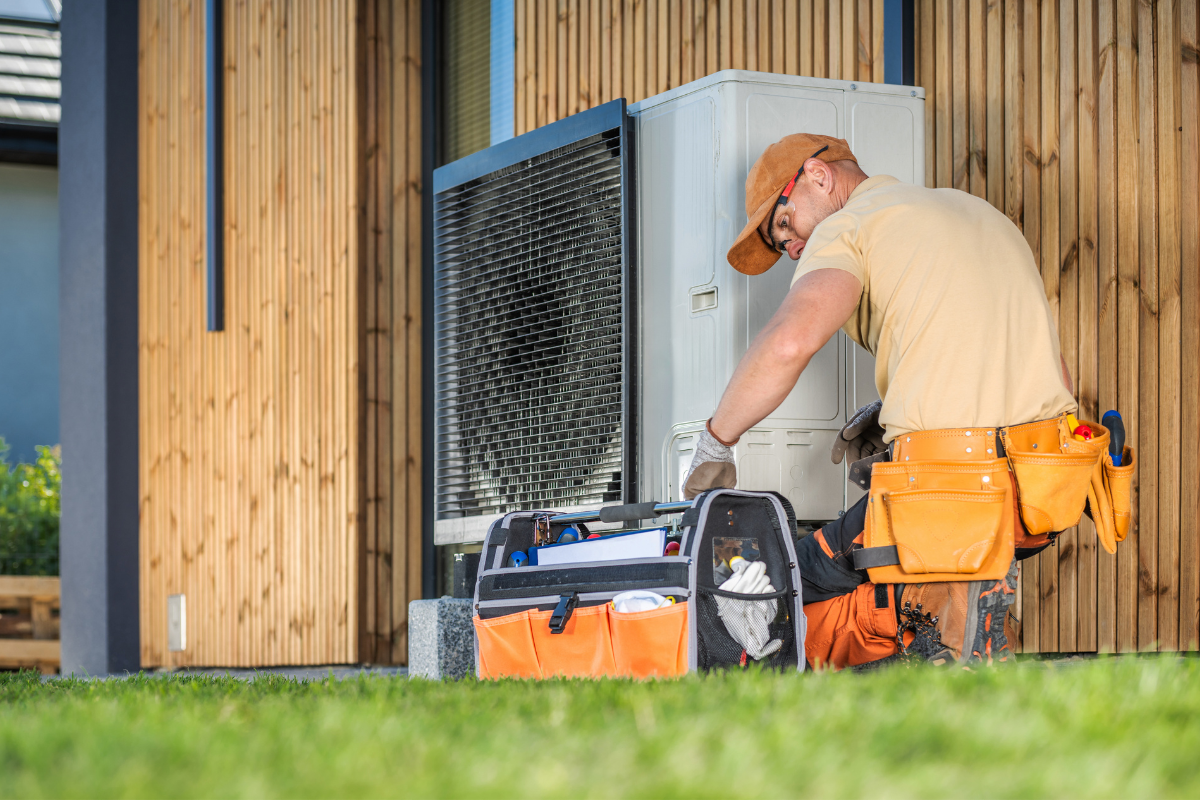
A caution drawn from field experience: outdoor units need breathing room. Place them where drifting snow, roof avalanches, or dryer exhaust cannot bury or foul the coils. Mount on brackets 12 to 18 inches off grade in snowy climates and specify a drain pan heater only if the manufacturer requires it. I have returned to too many houses where a beautifully efficient system underperformed because the unit sat in a snow bowl.
Ground‑source heat pumps
Ground loops shine when land allows horizontal trenching or when a drilling contractor is available for vertical bores at a reasonable cost. The efficiency is excellent, especially for radiant systems, but installation is specialized and coordination with site work is essential. When the ground loop goes in while the foundation is being excavated, costs drop, and trenching happens once. If you pursue this route, demand a detailed loop design with soil conductivity assumptions and test data when possible. Overly optimistic loop sizing leads to long run times in late winter and tepid supply temperatures.
Hydronic boilers with radiant or panel radiators
Hydronic systems remain the comfort benchmark for many. Low‑temperature radiant floors paired with a condensing gas boiler or an air‑to‑water heat pump produce even heat and quiet rooms. The key is to design around low water temperatures, ideally 100 to 120°F for most of the season. That allows condensing boilers to condense and heat pumps to operate with high COPs. I have seen beautiful radiant slabs compromised by high‑temperature loops that force boilers out of condensing mode and chew through fuel.
Panel radiators with thermostatic valves create simple zones without complex wiring. They excel in houses with varied heat gains, such as south‑facing rooms that need less heat midday. Radiant floors in bedrooms can be too slow to respond for people who regularly change setpoints. In those cases, panel radiators may be a better fit.
Furnaces
Gas or propane furnaces still have a place where electricity is costly or service infrastructure for heat pumps is thin. A variable‑speed ECM blower, sealed combustion, and matched ducts keep comfort high and noise low. The trap is legacy duct design: if you choose a furnace, you still need a modern load calculation and duct sizing per Manual D. Oversized furnaces paired with constricted returns and leaky supply trunks cause hot‑cold swings and dust circulation. New homes do not need to inherit old mistakes.
Hybrid or dual‑fuel
In cold climates with frequent subzero spells and access to inexpensive gas, a heat pump paired with a small furnace can be a pragmatic approach. The heat pump handles most of the season, the furnace covers the coldest mornings. Control lockouts must be set based on actual performance curves, not generic outdoor temperatures. In one project, moving the lockout from 25°F to 15°F saved a few hundred dollars a year with no comfort penalty once we verified the unit’s capacity and the house’s load curve.
Distribution matters as much as the heat source
A great heat source can be undone by poor distribution. Ducts should be inside the conditioned envelope whenever feasible. If that is not possible, insulate to at least R‑8, seal seams with mastic, and pressure test to verify leakage under 5 percent of fan airflow. Return paths must be planned, not assumed. Bedroom doors closed can starve returns, causing pressure imbalances and infiltration from the outdoors. Transfer grilles or jump ducts are quiet solutions that restore balance.
For hydronics, think ahead about manifold locations, loop lengths, and zoning strategy. Keep loops under 300 feet when using 1/2‑inch PEX in slabs, shorter for staple‑up. Balance loops during commissioning so supply returns even out. In a two‑story home, dedicated manifolds on each level simplify future service. For panel radiators, right‑size emitters to operate on low water temperatures and specify thermostatic radiator valves to avoid thermostat wars among rooms.
Air quality and ventilation, the often ignored partner
Tight homes need mechanical ventilation. Pairing a heating system with a heat recovery ventilator (HRV) or energy recovery ventilator (ERV) is not optional in practice, it is how you preserve indoor air quality without sacrificing energy goals. Integrate ventilation with the heating distribution only if the ducting supports it. Many central HRV tie‑ins fail because the heating ducts were never sized for the added continuous airflow, leading to noise or rooms that feel drafty. In smaller homes, dedicated ventilation ducting keeps things simple and predictable.
Pay attention to filtration. MERV 11 to 13 filters are achievable in most systems if the return area is sized correctly and pressure drop is considered during design. Slipping a high‑MERV filter into a return grille designed for a thin filter often doubles pressure drop, forces the blower to work harder, and can reduce airflow enough to harm heat exchangers or coils. Specify filter racks with sufficient depth and area at the design stage.
Controls and zoning that serve the occupants, not the other way around
Good controls feel invisible to the homeowner. They do not require fiddling ten times a day, and they maintain steady comfort. For heat pumps, prioritize thermostats and controls that understand staging and ramp rates, and disable aggressive setback behavior in cold weather unless the system is modeled to recover efficiently. Deep night setbacks on a ducted heat pump often trigger electric resistance backup, erasing any savings.
Zoning adds comfort when done judiciously. A two‑story house with different exposures usually benefits from at least two zones. But micro‑zoning a load that is already small can reduce run times to the point where equipment never reaches steady state. If you are tempted to create five tiny zones in a low‑load home, consider instead a single properly modulating system with balanced distribution and a smart thermostat that learns occupancy patterns.
Practical placement and layout tips from the field
Equipment lives in real spaces with joists, drains, noise concerns, and future service in mind. Utility rooms deserve daylight and a drain in the floor. Keep clearances per manufacturer requirements, and then add a few inches for sanity. A service technician should be able to remove a circulator or an air handler blower without disassembling half the room.
Outdoor heat pump units need protection from roof runoff. Extend gutters and add diverters above them. If snow slides are common, mount units on the gable end or beneath a modest awning that does not restrict airflow. For furnaces or boilers using sidewall venting, plan vent terminations away from walkways to avoid hot plume icing and exhaust recirculation.
Hydronic pipes crossing expansion joints in slabs need sleeves. Future‑proofing is cheap at build time: run a spare conduit from the mechanical room to the exterior for potential sensor wires or future EV charger integration. Label valves and circuits, and leave a laminated schematic in the mechanical room. The house will outlast the contractor’s memory.
Energy sources, rates, and resilience
Electricity rates and gas prices vary widely. Before committing, run a simple annual operating cost comparison using your local utility rates and equipment efficiencies. A heat pump with a seasonal COP of 2.5 and electricity at 18 cents per kWh will land differently than the same system at 12 cents. Include the carbon intensity of your grid if that matters to you, and factor in time‑of‑use rates if your utility uses them. Some homeowners add a small battery or generator for resilience. If winter storms cause frequent outages, verify that your chosen system can run on a generator and understand the startup surge. Variable‑speed compressors are often friendlier to generators than old single‑speed units, but control electronics still need stable power.
Permitting, codes, and inspections
Code compliance sets the floor, not the ceiling. Local codes may dictate combustion air requirements, refrigerant line insulation, condensate disposal, and ventilation rates. Get clarity early on any stretch energy codes or green building programs your jurisdiction has adopted. Where blower door testing is mandatory, plan to test once before drywall to catch glaring leaks, and again at the end. Inspectors appreciate clean documentation: load calculations, equipment submittals, duct or piping schematics, and commissioning checklists. Present those, and final sign‑off tends to go smoothly.
Commissioning, a step that pays for itself
Effective commissioning is the rare step that homeowners can feel in the first week of winter. It means sensors are calibrated, airflows measured, refrigerant charge verified by weight and performance, hydronic loops balanced, and setpoints programmed thoughtfully. On ducted systems, measure static pressure and airflow with a manometer and pitot tube or flow grid. Aim for the equipment’s recommended external static, not a number borrowed from another job. For heat pumps, verify defrost cycles behave as expected, and that crankcase heaters are wired per spec if required.
I have walked into homes where a new heat pump performed poorly simply because the installer left shipping spacers in the blower or never updated the dip switches for the installed coil. Fifteen minutes of setup can unlock twenty percent better comfort.
Planning for future change
Houses and families evolve. Children move out, a home office gets added, energy codes tighten, and utilities offer new incentives. Make choices that allow adaptation. Running slightly oversize conduit for refrigerant lines, leaving room for a second HRV core, or installing a hydronic manifold with two spare ports can save tearing open walls later. If you build with a gas boiler today but think you might switch to an air‑to‑water heat pump in a decade, design the emitters for low temperatures now. That single decision preserves your options.
When heating replacement applies to a new build
Most people use heating replacement when a system is failing in an existing home. In new construction, the same thinking applies during late design changes. If you pivot from a furnace to a heat pump late in the project, do not just swap the air handler and call it a day. Re‑run the load, re‑size ducts, and confirm electrical service and breaker space. I have seen rushed substitutions end in tripped breakers and rooms that never quite warmed up because the original duct layout assumed higher supply temperatures.
Working with contractors and setting expectations
Choose partners who measure. Ask how they calculate loads, what software they use, who performs Manual D or hydronic design, and what their commissioning checklist looks like. Good contractors will be transparent about capacity at design temperature and will show you performance curves. If someone promises a single two‑ton ductless unit will heat a sprawling two‑story home, press for a room‑by‑room load breakdown. It is your house, and your comfort for decades.
Clarify warranty and service. Who handles refrigerant leaks if they occur in year two? What is the expected lifespan of the chosen equipment, and what maintenance keeps it on track? A well installed heat pump should run 12 to 15 years, a boiler often longer with proper water quality and annual checks. Budget a modest annual maintenance visit rather than waiting for a no‑heat call on the coldest night.
Costs you can count and those you cannot
Upfront costs vary: ground‑source tends to be the most expensive to install, hydronics in the middle, and ducted air‑source or furnaces at the lower end, although regional labor markets skew this. Long‑term costs depend more on efficiency, utility rates, and maintenance. Indirect costs matter too. A heating system that allows ducts or pipes to remain inside conditioned space improves durability and controllability. Equipment that runs quietly preserves the peace of a bedroom at 2 a.m. Good filtration reduces dust and allergens. These benefits accumulate every day even if they are hard to sum in a spreadsheet.
A realistic, compact checklist before you sign off
- Confirm a Manual J load calculation and room‑by‑room breakdown, plus Manual D for ducts or a hydronic design with loop lengths and water temperatures. Keep ducts inside conditioned space when possible, otherwise insulate and pressure test; verify return paths for closed‑door rooms. Select equipment with capacity at your design temperature, not just nominal tonnage, and verify compatibility with controls and ventilation. Plan mechanical room layout and outdoor unit placement for service access, drainage, and protection from snow or roof runoff. Commission thoroughly: measure airflow and static pressure, set controls, balance hydronic loops, and document settings for future service.
What installation day should look like
A smooth heating unit installation reflects the preparation done upstream. The crew arrives with the right fittings and materials because someone read the submittals, not because they plan to make five supply runs. Lines are flushed before connecting to a hydronic boiler. Refrigerant lines are nitrogen‑purged and pressure‑tested, then evacuated to the manufacturer’s required microns and verified to hold. Ducts are sealed as they go, not painted over at the end. Thermostats mount on interior walls away from supply registers and direct sun. Insulation jackets go on valves and pumps, not left in a box.
The system is powered up with someone watching amperage draw and supply temperature or discharge air temperature, not just waiting to feel warm air. If adjustments are needed, the installer makes them and notes them on a startup sheet left on site. The homeowner gets a quick walk‑through focused on filter changes, what sounds are normal, and how to request service.
Final thoughts grounded in experience
A heating system is woven into the bones of a house. When it is designed with the envelope, tuned to the occupants, and installed with care, it becomes invisible in the best way possible. You do not think about it, you simply live in steady comfort. Take the time to shape that outcome. Use real load calculations, size for low temperatures, protect your distribution, plan ventilation with intention, and insist on commissioning. Whether your choice is a cold‑climate heat pump, a quiet condensing boiler with radiant floors, or a well designed furnace, the same discipline applies. New construction gives you a clean slate. Use it wisely, and you will not be thinking about heating replacement for a very long time.
Mastertech Heating & Cooling Corp
Address: 139-27 Queens Blvd, Jamaica, NY 11435
Phone: (516) 203-7489
Website: https://mastertechserviceny.com/